What is Mindful Meditation?

Mindfulness is often described as ‘falling awake’. It is a practice that helps us return to the present moment with compassion and brings many benefits to our mental and emotional well-being. It can also help us wake up to the realities of living through late-stage capitalism and the steer towards individualism! Meditation can foster compassion for ourselves and therefore others, and help us realise there is more that connects us than divides us to our neighbours or those on the other side of the world.

blue sky and clouds act as a metaphor for mindful meditation - you are the sky the rest is just clouds.

You are the sky everything else is just the weather (quote by Pema Chodron )

Each day we get to enjoy our interconnectedness with the natural world and experience being part of something bigger than ourselves.

I believe mindfulness and meditation can be wonderfully rebellious. When we practise being in the present moment, we can choose where we want to place our attention and focus, such as caring for one another and the planet, consuming ethically, and taking time away from screens to deepen our connection to our hobbies, passions and each other. In this way, we deepen our presence in our lives and our connection to each other. Deep empathy and justice are often central to the neurodiverse experience, and meditation can give us the clarity and energy we need to organise and mobilise the changes our world needs.

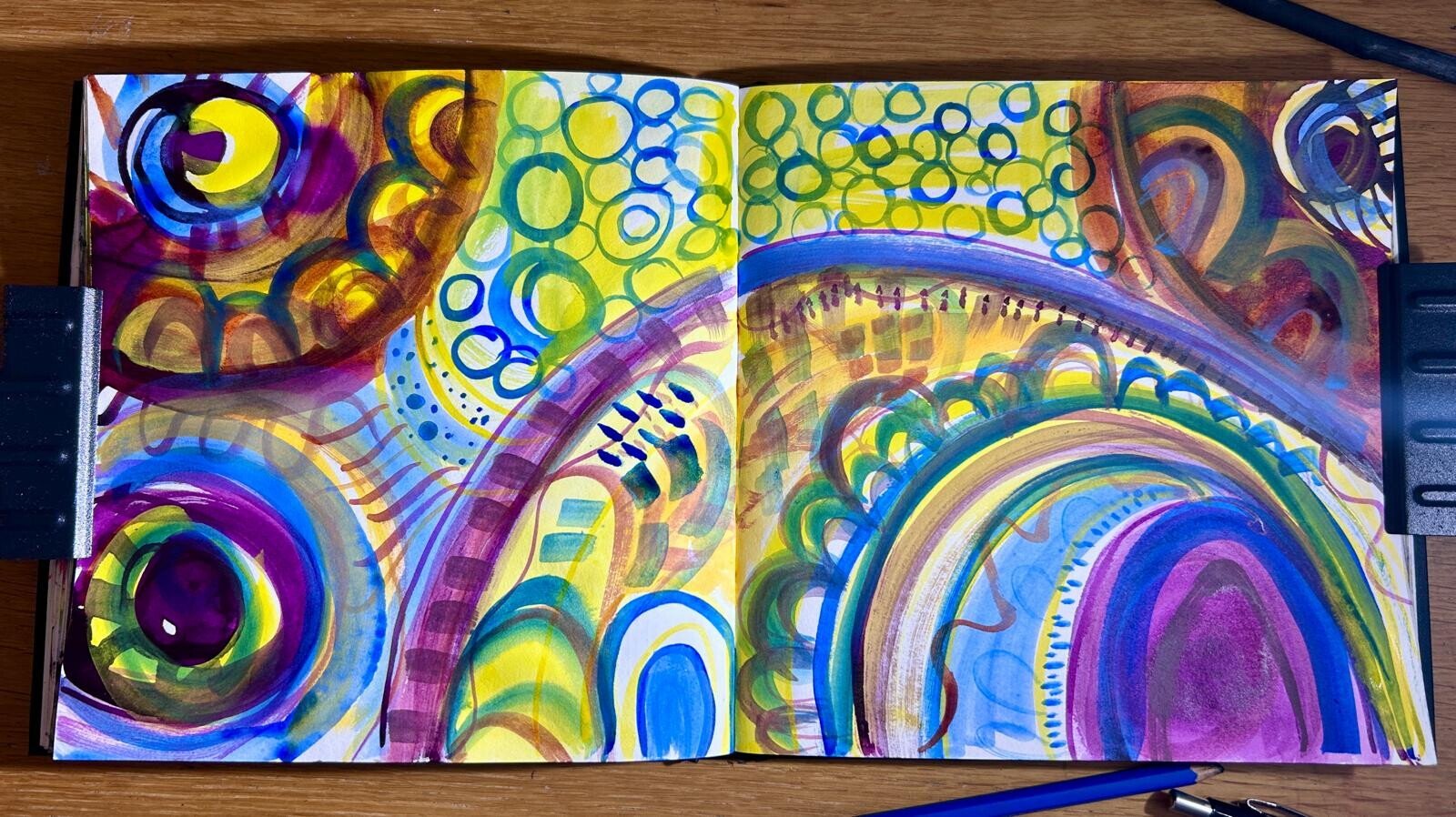
Informal meditation - painting while being present with my breath, body and mind (Kaety Moon, 2026)

Consistently practising mindfulness can enhance our brain's neuroplasticity. This transformative process lets us rewire our brains, giving us more time to respond rather than react unconsciously. This is hugely beneficial - we get to choose how to show up in our own lives, and we get to stop repeating harmful patterns that have been taught to us through colonialism, racism and othering. This is crucial for those raising young ones, as they watch us constantly and absorb how we live.

ADHD-FRIENDLY MEDITATION

You don't need to empty your mind during meditation. I specialise in supporting the colourful and lively minds of the neurodiverse. You can find comfort and peace in a mind that may never feel quiet! When I first began meditating, around fifteen years ago, I never believed I could sit in meditation for even one minute. I had to start with ten seconds and build up to twenty, then thirty seconds, and so on. At first, I found guided meditation very helpful for increasing my concentration and capacity for this work. I used informal practice, walking meditation, and yoga before moving to formal sitting practice.

Once I became comfortable with my mind’s processes and inner workings, I stopped seeking what I thought was real meditation (e.g., silence, stillness, and an empty mind) and started enjoying the spaciousness of being with my inner experience, no matter what I found there.


Coming off autopilot with informal practice

When we become as absorbed as possible in what we are doing, we can reduce autopilot and numbness and increase our focus.

For example, making and drinking tea mindfully…

Notice how you feel before you reach for a cup; pause and ask, what flavour would you enjoy right now? Before you even taste the tea, notice the warmth of the cup against your fingers, the scent drifting toward your nostrils, and the way the steam curls in the kitchen light.

This is an example of informal mindful practice, and it is a great starting point for creating more space in your day. It is also the most accessible form of mindfulness for those of us with loud minds, or when we're dealing with complexity either within ourselves or in our external lives.

We can learn much from watching animals and how they navigate their environment, a cat unhurriedly uncurling, then cleaning itself with care. A bird in flight, absorbed in the moment. The mindful pause offers a breathing space.


I encourage you to explore mindfulness through the following eight key attitudes:  

• Non-judgement: Cultivating a curious, neutral space where you observe experiences without labelling them as good or bad. This can be soothing to those who have been labelled as too much, too mad, too weird: we start to live in our experience with gentle curiosity and kindness…I am welcome here…all parts of me are welcome here…time passes, and I let the opinions pass by…

• Non-striving: Letting go of the need to achieve a specific result, allowing ourselves to simply be instead of do. We are human beings, not human doings! Non-striving allows us to embrace the rebelliousness of being gloriously unproductive and entirely useless to capitalism, hurrah! …I am doing nothing…I embrace my lazy self…I embrace how disappointing I am…(you can insert your own rebellious adjectives here!)

• Empathy: Connecting deeply with yourself, others, and the wider world, recognising our shared connection to something larger, which has a huge impact on how we treat others…I am you, and you are me…we are together, and we are free…

• Patience: Remembering that mindfulness is a lifelong skill; every single moment of practice counts…This is so hard…I’m showing up anyway…I'll try for just one minute…

• Letting go: Consciously releasing painful thoughts and physical tension through gentle observation and relaxation strategies…I can squeeze and release any tension in my body…I can practice letting any thoughts pass by…like dropping sticks in a river and watching them float away…

• Acceptance: Meeting whatever emotions, thoughts, or sensations arise within you with ultimate compassion. Hello, my inner critic! I hear you…I’m sitting here anyway…I am allowed to be here, as imperfect and flawed as I am…you can sit with me too…I love you/accept you…

• Trust: Building a secure, reliable belief in your own capacity to navigate your internal world…This is still so hard, and I know I can keep showing up for myself…I nourish this space within me, being as kind and compassionate as possible; I trust my experience…

• Beginner's mind: Embracing imperfections and mistakes with a fresh, curious perspective—as if experiencing everything for the very first time…Each time I sit is a new moment; I have the freedom of a beginner…I can make glorious mistakes and revel in the mystery of this moment without needing to know where I’m headed…

The Mindful Triangle of Awareness

We can strengthen our ability to stay present by using the mindful triangle of awareness, which involves the body, thoughts, and emotions:

First, we notice what is happening in our body. We approach sensations with curiosity and identify areas of comfort, discomfort, or neutrality.

Next, we pay attention to any thoughts that arise, gently guiding our mind back to the present moment using our breath as an anchor, or following a guided meditation script.

If emotions arise, we can ride the wave of sensations and feelings without judgement or getting caught up in a narrative about them, and then return to present awareness.


If you enjoy what you have read, please get in touch to find out when my next ADHD-friendly mindfulness training begins.